74 Companies Signed the Open Weights Letter. The Most Interesting Name Didn't.
Justin
· 7 min read
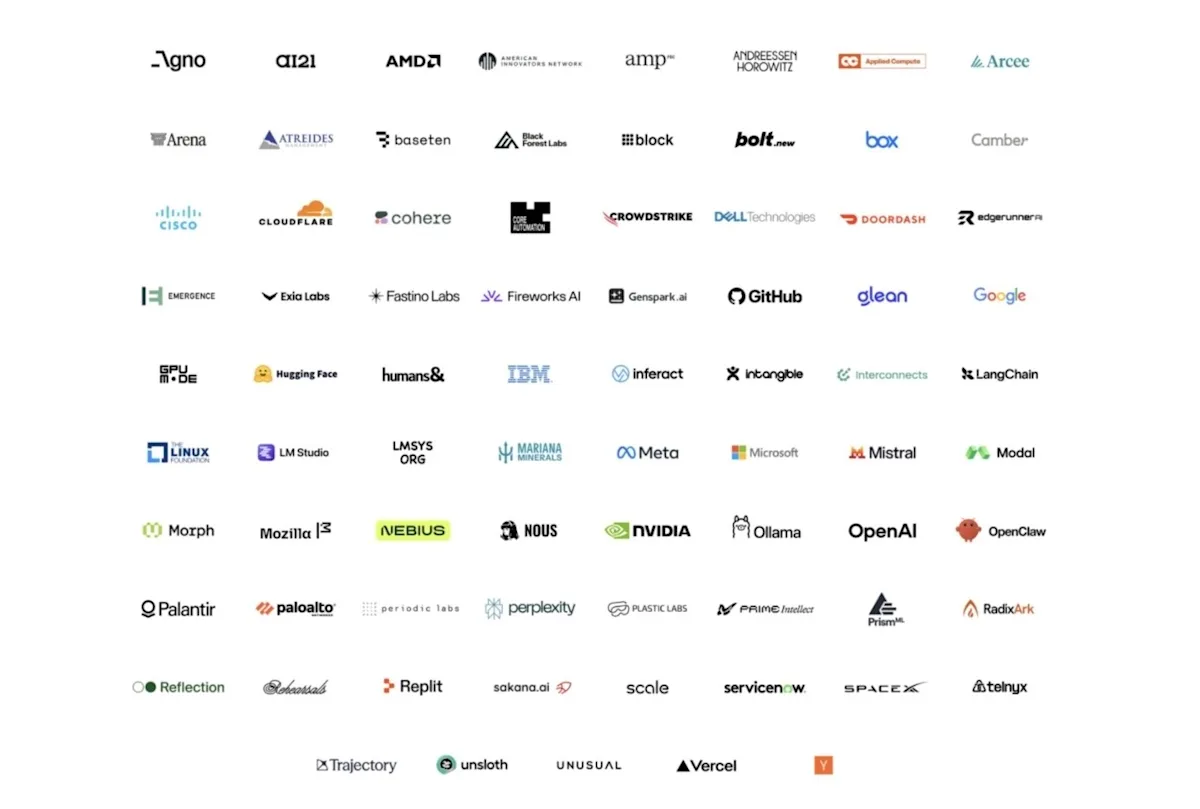
On July 24, Jensen Huang did something he had never done before: he posted on X. The post launched a policy letter called "Open Weights and American AI Leadership," signed by 25 companies and urging Washington not to restrict downloadable AI models. It cleared 11 million views.
Then the letter started eating the industry. Within 24 hours the roster hit 35. Then 50. The official list now shows 74 names, including OpenAI and Google, who both began as conspicuous holdouts and flipped.
Anthropic didn't flip. It hasn't signed any version, hasn't published a statement, and is now the only major frontier lab absent. Which makes the most interesting name on the biggest AI policy letter of the year the one that isn't on it.
Here's the story so far, in one table:
Question | Answer |
|---|---|
What is the letter? | A policy letter urging Washington to avoid "premature restrictions" on open-weight AI models |
When? | Published July 24, 2026, hosted on Microsoft's site |
Who launched it? | 25 companies, fronted by Nvidia's Jensen Huang in his first-ever X post |
Who signed late? | OpenAI within about 24 hours; Google in the next wave |
How many now? | 74 signatories on the official list as of July 27 |
Who is absent? | Anthropic and Amazon, on every version so far |
Has Anthropic explained? | No public statement. Everything beyond that is inference |
What the letter actually says
Strip away the launch theater and you get four arguments, straight from the official text. Open weights expand access to the AI economy. They strengthen competition, give customers control against lock-in, and might be a path to safety rather than a threat to it.
The letter casts open weights as the heir to 1980s open-source software and argues America's AI lead "will be judged not by one frontier AI model" but by the strength of its open ecosystem. It even concedes that open weights carry "real and distinct risks" before arguing the answer is defense-in-depth, not prohibition. If you read our agentic breach coverage, the security logic will sound familiar: defenders need models as capable as attackers' models, and stacking all the capability behind a few closed doors creates single points of failure.
One paragraph matters more than the rest. The letter defends distillation (training one model on another's outputs) as a legitimate technique, and says unlawful extraction should be handled with "targeted legal and commercial frameworks" rather than sweeping restrictions.
Hold that thought. It's about to get uncomfortable.
So why hasn't Anthropic signed?
Nobody outside Anthropic knows, because Anthropic hasn't said. That's the honest answer, and any article promising to "explain" the absence without leading with it is selling inference as fact. What we can do is lay out the verified context that makes the silence legible, with every item labeled for what it actually is.
The reported positioning (secondary sourcing). Industry coverage characterizes Anthropic as taking an increasingly firm line against open-weight frontier models, which fits its safety-first public identity. Anthropic itself has never framed its absence from this letter.
The distillation twist (on-record official claim). The same week the letter launched, White House advisor Michael Kratsios said China's Moonshot AI built Kimi K3, currently the strongest open-weight model in the world, by distilling Anthropic's technology. He called covert industrial distillation aimed at stealing US technology "unacceptable."
Now put the two documents side by side. The letter Anthropic declined to sign explicitly defends distillation as legitimate. If Kratsios is right, Anthropic was being asked to co-sign a defense of the technique it was allegedly the biggest victim of, days after the allegation went public. That's context, not Anthropic's stated reason. It's also the single most concrete fact in the entire "why" debate.
The commercial reading (labeled speculation). Commentators note that closed-model leaders would benefit if Washington restricted Chinese open-weight rivals, and that Anthropic is reportedly preparing for an IPO. This is outsiders doing analysis, not evidence of motive. We flag it because you'll see it everywhere this week, usually stated as fact. It isn't.
Two more data points, in fairness to both sides. OpenAI and Google face the same commercial logic and signed anyway, which punches a hole in the purely-mercenary explanation. And the pressure Anthropic is resisting is real: with roughly 74 names on one side, its absence now reads as a deliberate position rather than an oversight, whatever the reasoning behind it.
What this means if compliance is your job
This letter is the industry side of the exact policy battle we mapped in our Chinese open-weight LLMs legal guide last week. Washington is weighing restrictions on downloadable models, sanctions over distillation, and liability rules for companies hosting Chinese models -- and the letter landed a day after nearly 200 startups made a similar plea to the White House. Both sides are now lobbying in public, which means the outcome is live.
Three practical reads for your planning:
The rules are contested, so build for both outcomes. If your stack depends on open weights, the vetting checklist and the mirror-your-weights advice from our legal guide apply with more force this week, not less.
The "distillation clause" is the fight to watch. Whether legitimate distillation gets legally separated from industrial-scale extraction will shape model licensing, provenance duties, and vendor contracts. Nobody knows where the line lands yet. That's the point.
And signatory status just became a data point in vendor diligence, the same way certifications are. Not because signing is virtue... but because it tells you where your vendor stands on the openness spectrum you're betting your architecture on. Our directory tags tools by framework and certification; where a vendor stands on open weights is worth adding to your own questionnaire, and the Finder can shortlist by deployment model in three questions.
The full list of 74
All signatories from the official letter, as of July 27, 2026:
Agno • AI21 • AMD • American Innovators Network • AMP • Andreessen Horowitz • Applied Compute • Arcee AI • Arena • Atreides Management • Baseten • Black Forest Labs • Block • Bolt • Box • Camber • Cisco • Cloudflare • Cohere • Core Automation • CrowdStrike • Dell Technologies • DoorDash • EdgeRunner • Emergence Capital • Exia Labs • Fastino Labs • Fireworks AI • Genspark • GitHub • Glean • Google • GPU MODE • Hugging Face • humans& • IBM • Inferact • Intangible • Interconnects AI • LangChain • The Linux Foundation • LM Studio • LMSYS • Mariana Minerals • Meta • Microsoft • Mistral • Modal • Morph • Mozilla • Nebius • Nous Research • NVIDIA • Ollama • OpenAI • OpenClaw • Palantir • Palo Alto Networks • Periodic Labs • Perplexity • Plastic Labs • Prime Intellect • PrismML • RadixArk • Reflection • Rehearsals • Replit • Sakana AI • Scale • ServiceNow • SpaceX • Telnyx • Trajectory • Unsloth • Unusual Ventures • Vercel • Y Combinator
Notably absent: Anthropic and Amazon. The roster is a living document; check the official PDF for the current version.
Your Action Plan
The signature count will keep moving. Your posture shouldn't depend on it.
Add "open-weights position" to your vendor questionnaire, right next to certifications. Where your model provider stands predicts how policy shifts will hit your stack.
Track two policy threads: the Chinese-model restriction push and the emerging distillation-clause debate. One owner, weekly check, per our legal guide's action plan.
If you run open weights, mirror them now. Both sides of this fight could produce rules that change availability with little notice.
And watch for Anthropic's actual statement. The only thing that ends the speculation is the company explaining itself. If it does, that explanation becomes the most-read AI policy document of the month.
Seventy-four names chose a side in public. The most important voice in the debate still hasn't spoken.